By Chris Dralla, TypeLaw Founder & CEO
Building community, advancing justice
Every year, appellate practitioners across California look forward to the California Appellate Defense Counsel (CADC) Annual Conference and Seminar. As someone who has built my career around finding better ways to support fellow appellate attorneys, I’m proud that TypeLaw is sponsoring this year’s 32nd annual event, which is taking place March 20–21, 2026, in South San Francisco.
For those considering attending, and for colleagues and TypeLaw customers who’ve been part of this community for years, I want to reflect on why TypeLaw stands behind CADC, why this conference matters, and how we see our work fitting into the broader mission of advancing appellate defense.
The voice of the panel in California
CADC is more than a professional association. Since its founding in the late 1980s as the Independent Appellate Attorneys for Justice, and evolving into the statewide organization that it is today, CADC has worked to strengthen the voices and capabilities of court-appointed appellate counsel across California.
With 400+ members, CADC is recognized as a critical partner in pushing for system improvements, compensation advocacy, education, and community among panel attorneys handling criminal and dependency appeals. Through its chapters, brief bank, forums, and ongoing dialogue with appellate projects and the Administrative Office of the Courts, CADC offers meaningful resources that no single appellate attorney—or even firm—could easily replicate on their own.
TypeLaw’s decision to sponsor this year’s conference grew out of our alignment with CADC’s mission. We’ve built our company to serve appellate attorneys with tools that eliminate technical busywork—so they can spend more time on persuasive legal analysis, client advocacy, and strategic thinking.
In our work with lawyers across the country, we’ve seen how isolating and intense appellate practice can be, and we believe organizations like CADC play a vital role in connecting, educating, and advancing the profession. Supporting this conference lets us contribute in a way that’s consistent with our values: elevating the work of dedicated advocates and reinforcing a community that, day in and day out, represents the most vulnerable clients in high-stakes proceedings.
How TypeLaw helps panel attorneys
CADC’s mission resonates deeply with how TypeLaw approaches technology and service. We’ve always believed that supporting panel attorneys means respecting the complexity of the work they do and addressing the very real obstacles they face—not just in litigation strategy, but in the mechanics of briefing practice that can drain time, energy, and focus.
Our goal is to shrink the gap between brilliant legal thinking and the tedious technical work that too often consumes precious hours.
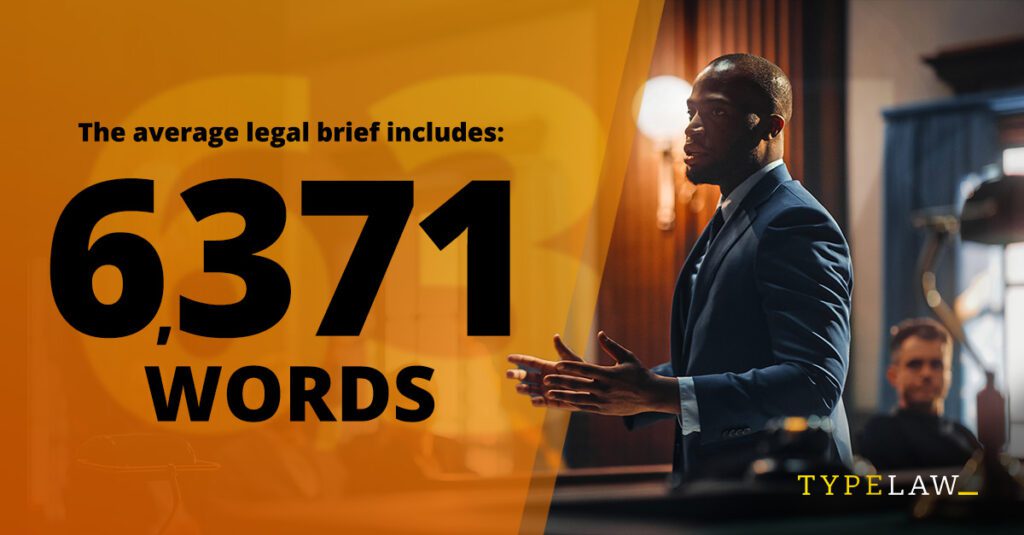
Appellate briefs and appendices are demanding documents to produce: research we conducted on The Anatomy of a Legal Brief found that the average brief contains 6371 words, 67 citations to authority, 139 citations to the record, 16 headings (nested into 4 levels), and many other complex structural elements—all of which must be both accurate, and accurately formatted, in compliance with local rules.
Using a combination of AI automation and human expertise, TypeLaw can very quickly transform a draft brief created in Word or WordPerfect into a fully-formatted, locally-compliant, ready-to-file PDF e-brief, including automatically building tables of content and authorities, inserting bookmarks, validating and hyperlinking citations, and much more. See how it works.
We eliminate the frustration, monotony, and frankly, the time-suck of formatting, so you can invest your intellectual energy where it matters most: crafting persuasive arguments and advocating for your clients. We also provide tools that let you perform unlimited edits without the typical rework headaches, automatically updating your tables, pagination, and citations as you refine your argument.
See you at the CADC 2026 conference?
Sponsoring the CADC Annual Conference is our way of recognizing and reinforcing the extraordinary work that CADC members do, often under challenging conditions.
With distinguished speakers, including Associate Justice Kelli M. Evans of the California Supreme Court, sessions on the practical and ethical use of AI, roundtable discussions on creating a sustainable and satisfying appellate practice, and panels addressing emerging jurisprudence in areas like mental state defenses and standards of review, the CADC 2026 Annual Conference agenda reflects the diversity and depth of issues appellate counsel face every day. MCLEs are also earned.
If you’re already registered, I look forward to seeing you there and learning more about how TypeLaw can best support your practice. If you’re considering attending, I hope you’ll take this opportunity to immerse yourself in two days of meaningful dialogue, practical insights, and the energizing camaraderie of people who devotedly serve the appellate bench and, most importantly, their clients. You can register online here.
Thank you to CADC for building and nurturing this community. And to all appellate attorneys: here’s to deepening our craft, supporting one another, and continuing the crucial work of advancing justice in every brief, argument, and decision that shapes our courts.
If you’d like to prepare compliant briefs, appendices, and excerpts of record more efficiently, so you can focus on substance over formatting details, please contact TypeLaw.