
By Chris Dralla, Esq., Founder & CEO, TypeLaw
Why do lawyers love golf?
There are plenty of ways to spend a Saturday morning, but for generations, attorneys have chosen to spend theirs chasing a little white ball around a golf course.
It’s a stereotype for a reason.
Walk onto almost any golf course and you’ll find lawyers, judges, business owners, and other professionals who thrive on challenge, competition, and continuous improvement.
Golf has long been a favorite pastime of attorneys, and after years of practicing law, building a legal technology company, and playing plenty of rounds myself, I don’t think that’s a coincidence.
The skills that make someone successful on the golf course aren’t all that different from the skills that make someone successful in the courtroom or at their desk drafting a brief. Both reward preparation, precision, and discipline—and punish avoidable mistakes.
A tradition shared by lawyers and golfers
The connection between law and golf isn’t new. One of the most celebrated figures in golf history, Bobby Jones, was also a lawyer.
Before becoming a golf legend, Jones studied law at Emory University, passed the Georgia bar exam after just three semesters, and practiced law in Atlanta. He remains the only golfer ever to complete golf’s original Grand Slam, winning the British Amateur, Open Championship, U.S. Open, and U.S. Amateur in a single season back in 1930. He was also instrumental in founding the Masters tournament, golf’s greatest tradition.
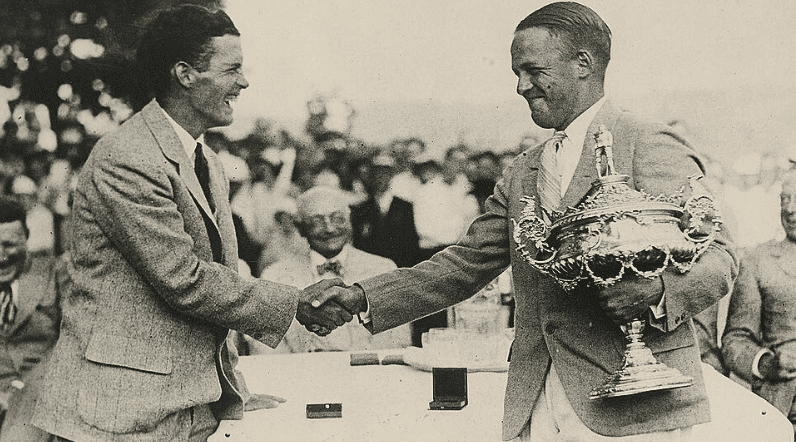
But Jones’s legacy extends far beyond his accomplishments on the course. The USGA’s highest honor, the Bob Jones Award, is named in his honor and recognizes individuals who demonstrate the spirit, personal character, and respect for the game that Jones embodied throughout his life.
It’s not hard to see why his example continues to resonate with attorneys. Jones built his reputation not only on talent, but on judgment, discipline, integrity, and personal accountability—qualities that are just as valuable in the practice of law as they are in golf.
Success starts before the first shot
One of the biggest misconceptions about golf is that it’s simply a game of athletic ability. The reality is that most golfers win or lose long before they step onto the first tee.
The best players prepare. They study the course. They understand the conditions. They know where trouble lies, and they develop a plan to navigate it (often with the help of a trusted caddie). They build a strategy.
Lawyers do the same thing. They don’t show up in court and improvise. Successful litigation is about understanding the facts, researching the law (often with the help of a trusted paralegal), anticipating arguments, and preparing thoroughly before ever stepping into a courtroom or filing a brief.
The attorney who spends extra time understanding the record, verifying citations, and refining arguments is much like the golfer who carefully studies the course layout before the round begins. Neither is relying on luck. They’re relying on preparation.
Precision matters more than power
If you’ve ever watched professional golf, you’ve probably noticed something surprising:
The longest hitter doesn’t always win. Distance helps, but precision is what separates good golfers from great ones. The player who consistently finds the fairway and places approach shots in the right position often beats the player who tries to overpower the course.
The same principle applies to legal practice.
Many attorneys are capable of producing lengthy briefs packed with arguments, but the most persuasive advocates know that success typically comes from precision rather than volume.
A carefully crafted argument supported by the right authorities is usually more effective than 10 weaker arguments competing for attention. Judges, much like golf scorecards, reward accuracy.
The goal isn’t to hit every shot as hard as possible. The goal is to put the ball—or your argument—exactly where it needs to be.
Avoiding unforced errors
Perhaps the greatest lesson golf teaches is that success often comes from avoiding mistakes rather than producing spectacular moments. Most golfers lose because of penalties, missed short putts, poor course management, and other preventable errors. A ball hit out of bounds can undo several great shots.
The legal profession has its own version of unforced errors, such as:
- Missed deadlines
- Citation mistakes
- Sloppy formatting
- Incomplete records
- Incorrect filings
- Failure to comply with local court rules
None of these mistakes reflect an attorney’s ability to perform substantive analysis, or their overall legal skill, but these errors can still create headaches, delay proceedings, frustrate clients, undermine credibility—or even lead to sanctions.
The best attorneys understand that part of delivering excellent work is minimizing opportunities for avoidable mistakes. That’s one of the reasons we built TypeLaw. Our mission has never been to replace attorneys or paralegals. It’s to help eliminate the kinds of mechanical and formatting tasks that can introduce unnecessary errors into the briefing process.
By automating tedious work such as formatting briefs to conform to local rules of court, building tables of authorities, creating appendices, and managing citation hyperlinks, attorneys can focus more of their energy on advocacy and less on administrative details.
Just as golfers use technology and training aids to improve consistency, lawyers increasingly use technology to improve accuracy and reduce risk of unforced errors.
Discipline wins over time
Every golfer eventually learns an uncomfortable truth: the game doesn’t care how good your last round was. You start over every time you tee it up. That’s why discipline matters so much.
The best players follow routines. They commit to processes. They focus on fundamentals. They avoid getting too high after a great shot or too low after a bad one.
Lawyers face similar challenges. Every new case presents unique facts, new opponents, and different legal questions. Prior successes don’t guarantee future results.
The attorneys who consistently excel are often those who maintain disciplined habits. They review their work carefully. They follow proven processes. They continue learning and improving throughout their careers.
The practice of law, like golf, is ultimately a long game.
Learning to recover
Of course, no golfer plays a totally perfect round. The same is true in legal practice. There will always be difficult cases, unfavorable rulings, missed opportunities, and moments we’d like to replay.
What separates successful golfers—and successful attorneys—isn’t perfection, it’s recovery.
A bad drive doesn’t end a round. A setback in litigation doesn’t define a case. The ability to adapt, regroup, and execute the next shot often determines the final outcome. That’s a valuable lesson, whether you’re standing in a fairway bunker or preparing for oral argument.
Supporting the next generation of golf talent
At TypeLaw, our appreciation for golf extends beyond the lessons it teaches. We’re proud to support emerging talent in the sport through our sponsorship of rising women’s golfers Annika Borrelli and Riana Mission.

Like many accomplished athletes, Annika and Riana embody the qualities that attorneys respect and admire: dedication, hard work, discipline, and a commitment to continuous improvement—where success comes from countless hours of preparation and an unwavering focus on execution.
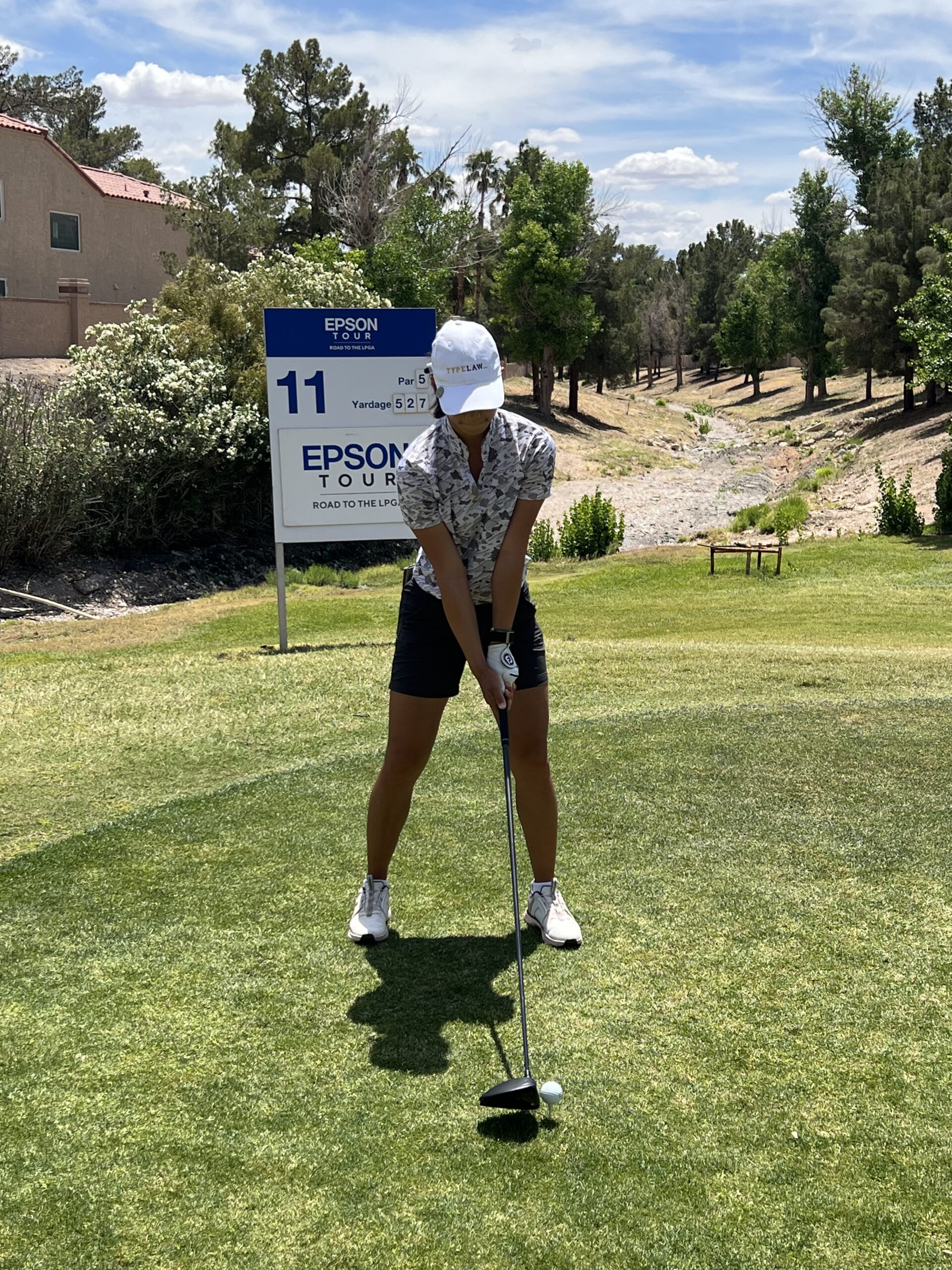
Those same qualities drive successful legal careers. TypeLaw is excited to support not only fellow attorneys, but the next generation of golf talent who represent the best aspects of competition, professionalism, and perseverance.
More than a game
People sometimes joke that a bad day on the golf course is better than a good day at work. I’d argue that you really can’t beat the feeling of a hard fought, successful outcome in court—but I do think the relationship between law and golf runs deep, and I love both.
Golf provides a unique opportunity to practice skills that matter both on and off the course. It teaches patience when things aren’t going your way. It rewards preparation and precision. It reinforces the importance of discipline and consistency. And perhaps most importantly, it reminds us that avoiding small mistakes is often just as important as producing extraordinary moments.

Whether you’re preparing for a major appeal, drafting a brief, negotiating a settlement, or standing over a four-foot putt to save par, the fundamentals remain surprisingly similar.
See you on the links—and if you’re ever in the Bay Area and want to play a round with some of the TypeLaw team, John and Hannah are former D1 college golfers who’d be happy to share a tip or two!


